Prime Rib Roast
This post may contain affiliate links. Please read my disclosure policy.
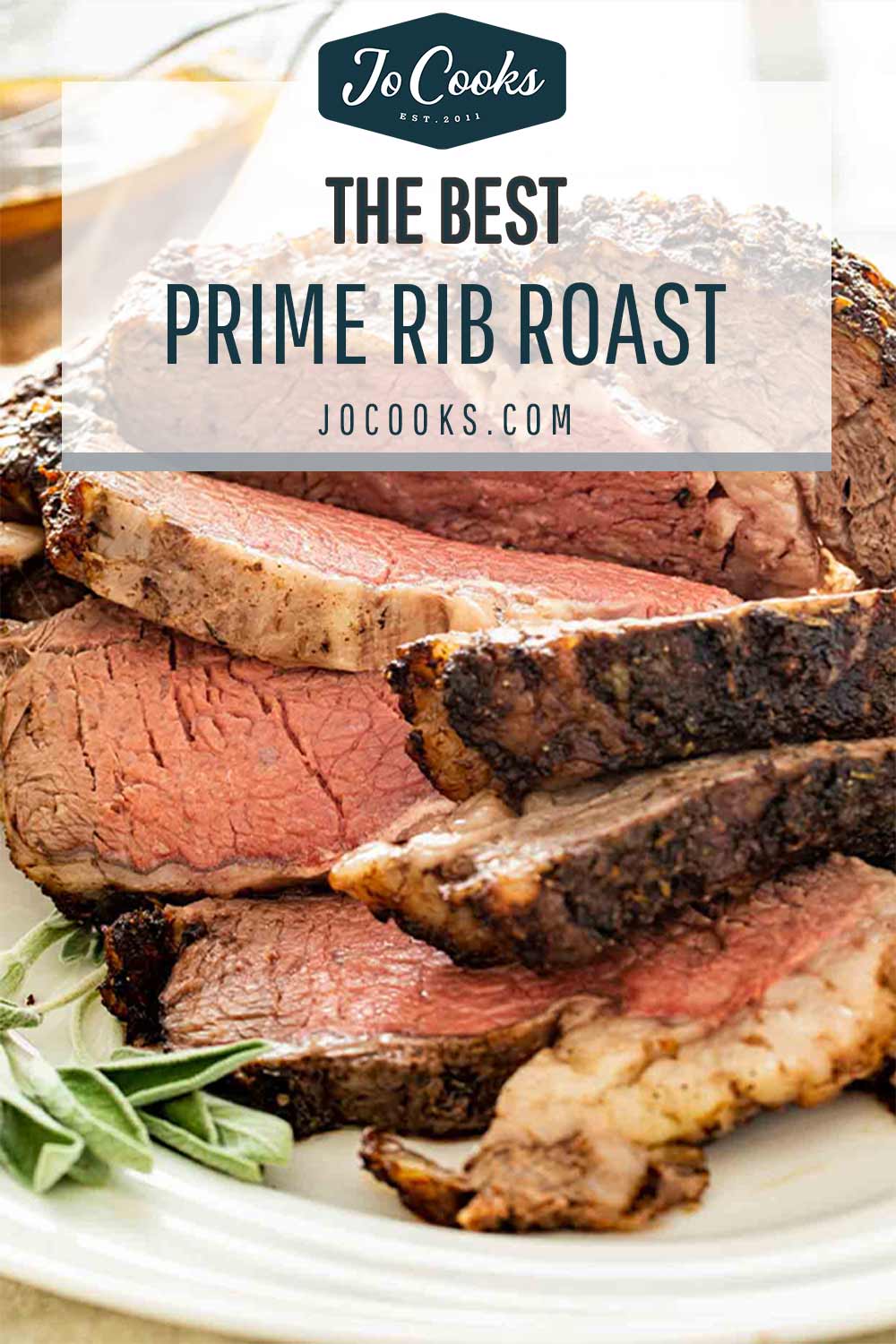
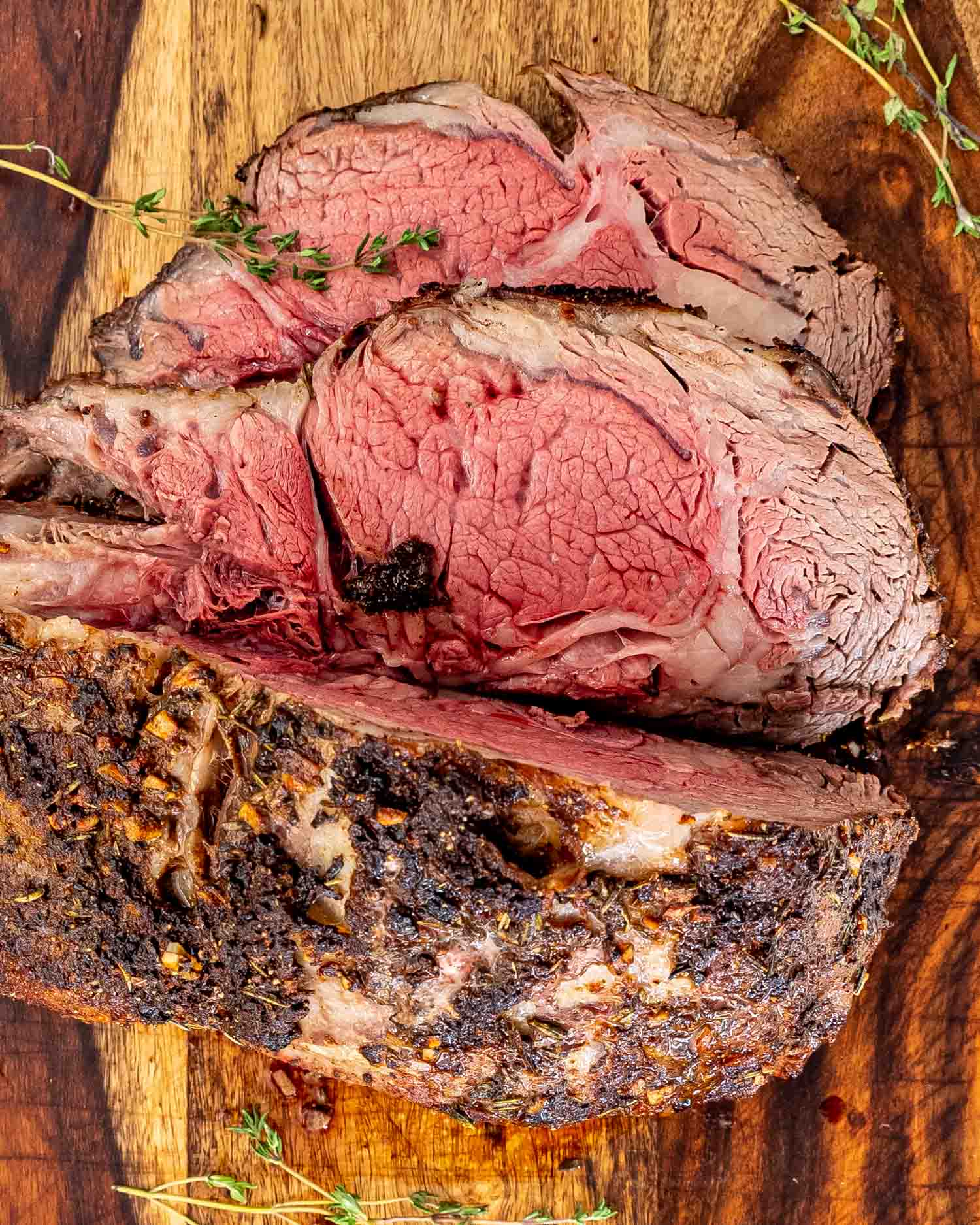
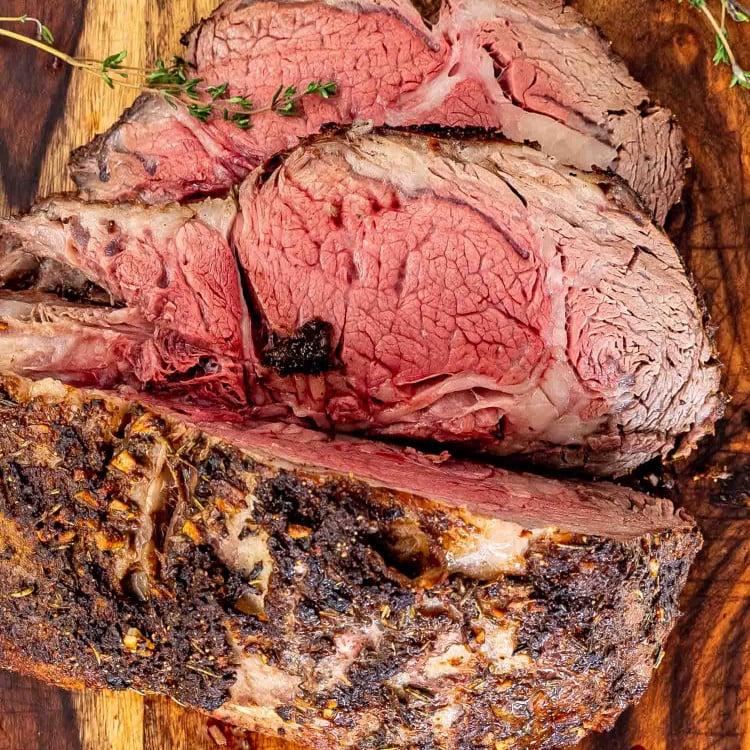
If you’re scared of ruining a Prime Rib Roast, my foolproof recipe is about to change your life. Crispy crust, juicy center, perfect doneness every time, no guesswork, no stress, and zero regrets.

This is the holiday roast at our house. When I pull this prime rib out of the oven, everyone stops talking. I’m not even exaggerating. The smell alone gets people hovering in the kitchen like I’m handing out cash. And the best part? It looks and tastes like you spent all day fussing, but it’s honestly one of the easiest roasts to make if you follow the steps.
I’ve made this roast more times than I can remember, and every single time it delivers. No guesswork, no drama, just a showstopper dinner that’ll have everyone convinced you’re a total pro.
Why You’ll Love This Prime Rib Roast
- Foolproof and Stress-Free: No guesswork, no anxiety. I’ve tested this standing rib roast more times than I can count, and this method just works, juicy, rosy pink beef with a crust that makes people swoon.
- Holiday Showstopper: Whether it’s Christmas dinner or a big celebration, this prime rib roast is the holiday beef recipe that makes jaws drop (and guests beg for seconds).
- Simple Ingredients, Big Flavor: No fancy tricks here. Just quality beef, some bold seasoning, and a herby compound butter that turns this into pure magic.
- Cooks Perfectly Every Time: Medium-rare lovers, rejoice. I walk you through exactly how to hit that perfect internal temp so your roast is tender, juicy, and never overdone.
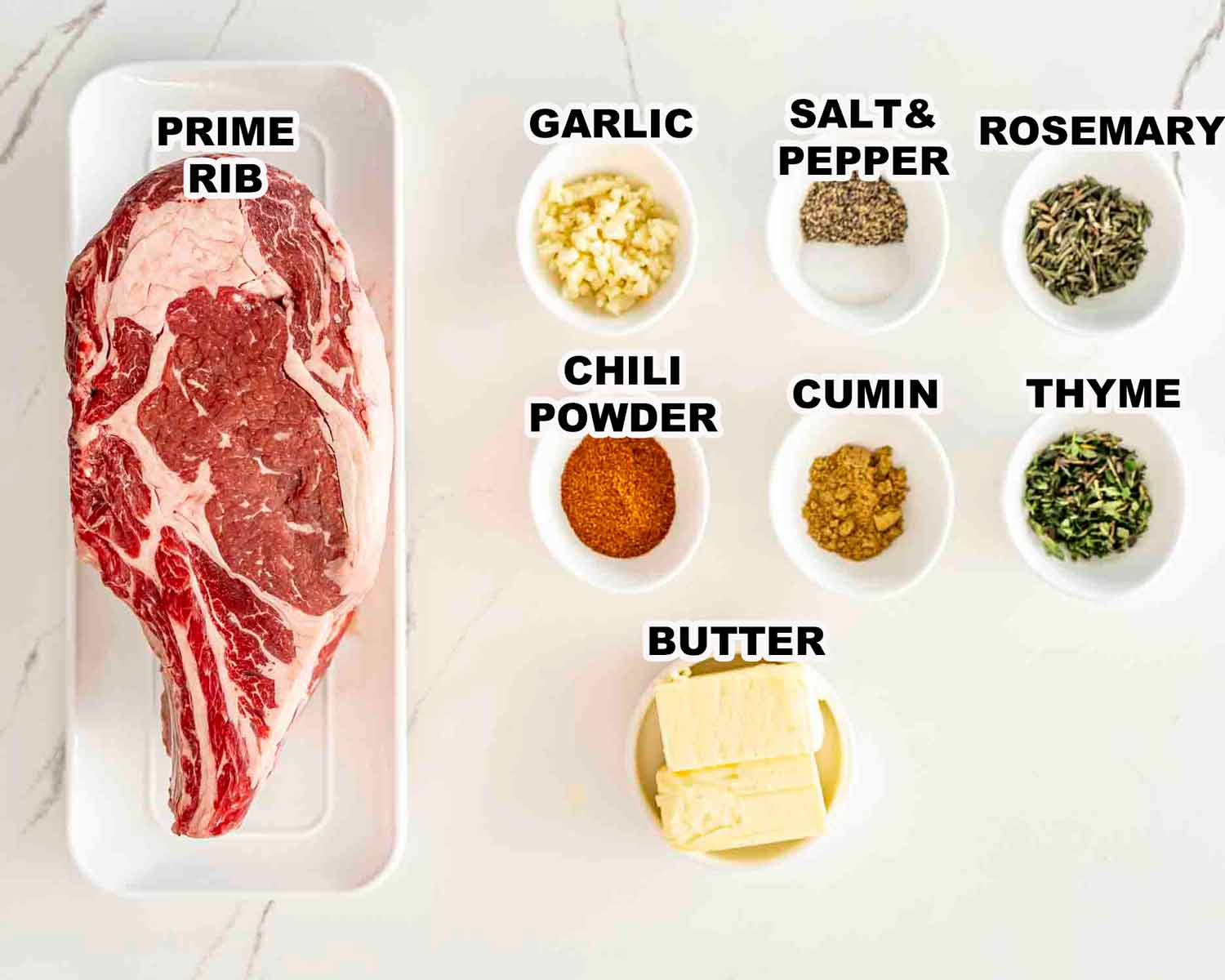
- Go bone-in. The bones insulate the meat and keep it juicy. Plus, they make your roast look way more impressive on the table.
- Prime or Choice grade? Prime is ideal (hello, marbling), but Choice will still deliver. Just make sure it’s well-marbled.
- Dry-aged is a treat, not a must. If you see it and you’re feeling bougie, go for it. The flavor is unreal. But don’t stress if not.
- Ask your butcher to tie the roast. Bonus points if they cut the bones off and tie them back on. Easiest slicing ever.
- Let it come to room temp. Take the roast out 1–2 hours before cooking. Cold meat = uneven cooking. Don’t skip it.
- Pat it dry. Like really dry. This is the secret to that gorgeous crust.
- Season like you mean it. Salt, pepper, and that spiced herb butter? Don’t be shy. This is your flavor foundation.
- Use a thermometer. This isn’t a “poke and guess” situation. You want medium-rare? You need precision.
- Let it rest! Always rest your prime rib for 20 minutes, tented with foil, after roasting. The juices settle, the temp rises a bit more, and you won’t lose all that flavor on your cutting board. Trust me, worth the wait.
- How Many Ribs? Each rib serves about 2 people, so a 3 rib roast feeds 6. If you’re feeding a crowd, get more ribs. If it’s just you and your better half (or your dogs, no judgment), leftovers are prime (pun intended) for sandwiches.
- How Much Per Person? Plan for about 1 pound per person for a bone-in roast. Sounds like a lot, but between the bone and the fact that everyone will want seconds, trust me, it goes fast.
Prime Rib Roast Internal Temperature Guide
Timing is a pretty loose guide when it comes to cooking prime rib. Ovens are all different. A thermometer is the ONLY way to guarantee a perfectly cooked prime rib just how you like it.
| Doneness | Remove From Oven At | Final Temp (After Resting) | Texture & Color |
| Rare | 115–120°F (46–49°C) | 120–125°F (49–52°C) | Cool red center |
| Medium Rare | 120–125°F (49–52°C) | 130°F (54°C) | Warm red center – ideal 👌 |
| Medium | 130°F (54°C) | 135–140°F (57–60°C) | Pink center, less juicy |
| Medium Well | 140–145°F (60–63°C) | 150°F (65°C) | Slightly pink, firmer |
| Well Done | 150°F+ (65°C+) | 160°F+ (71°C+) | No pink, very firm (why though?) |
Pull your roast out of the fridge and let it sit for 1 to 2 hours. Yes, it sounds annoying, but this helps it cook evenly and avoids that sad grey ring around the edges. Pat it dry with paper towels so the crust actually crusts.
Crank that oven up to 450°F (232°C) and let it fully preheat. No shortcuts. You want it blazing hot to sear the outside and lock in those juices.
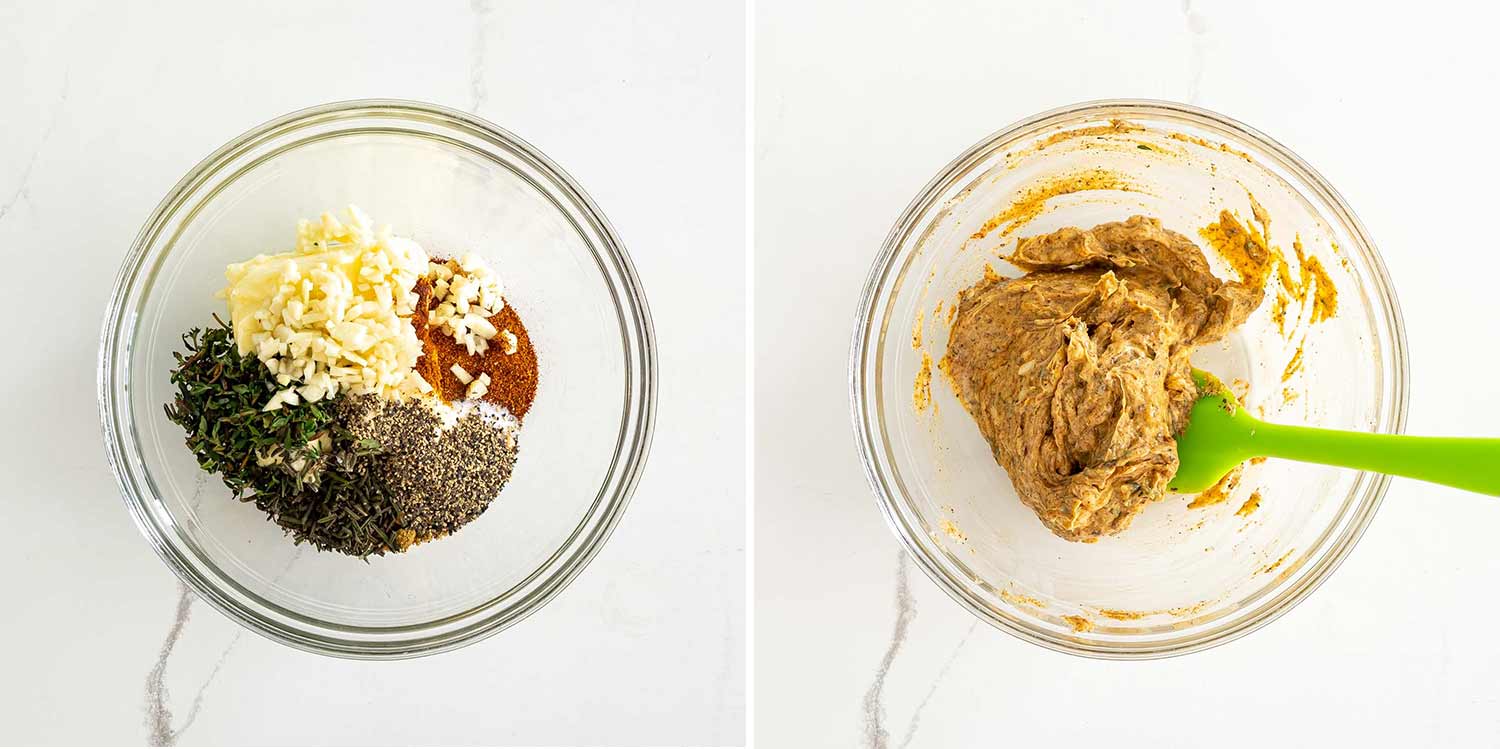
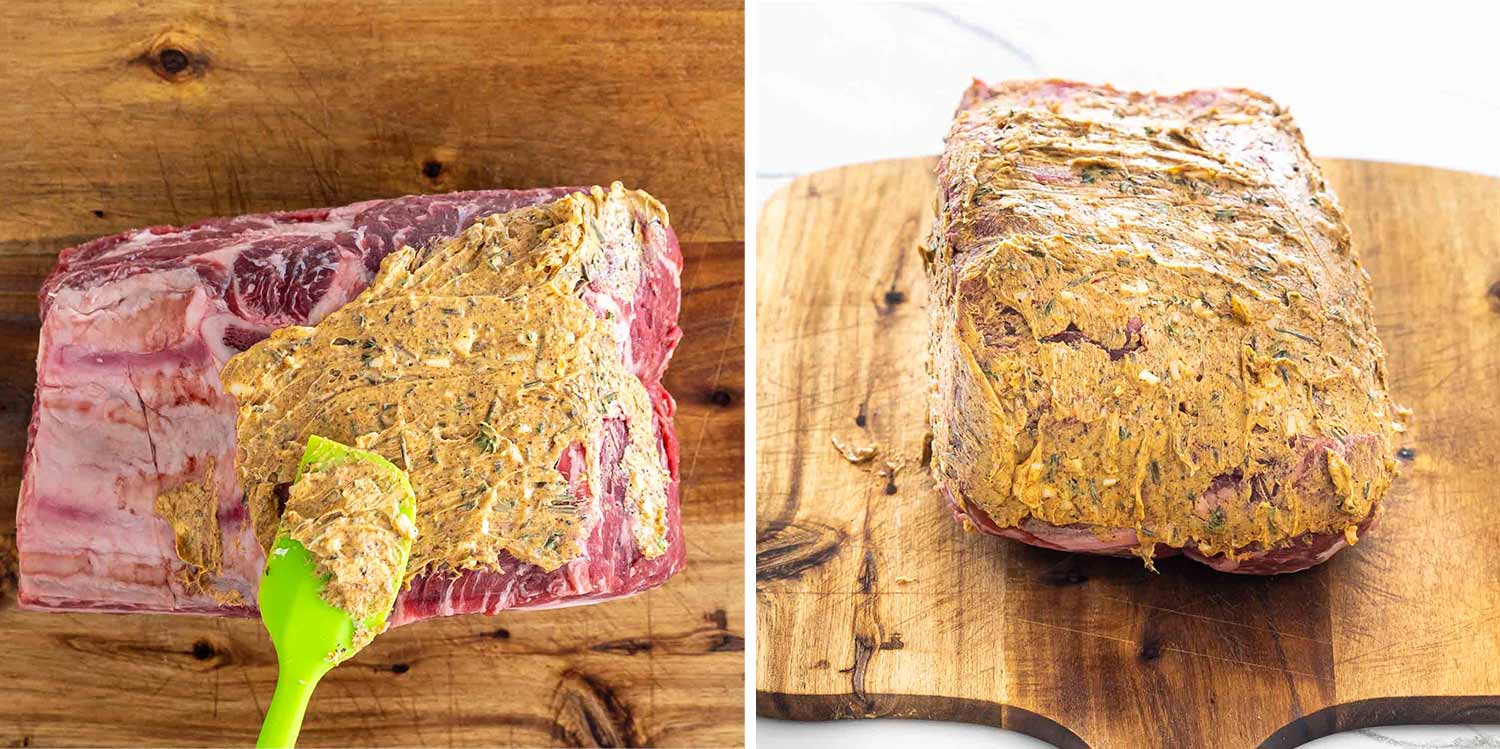
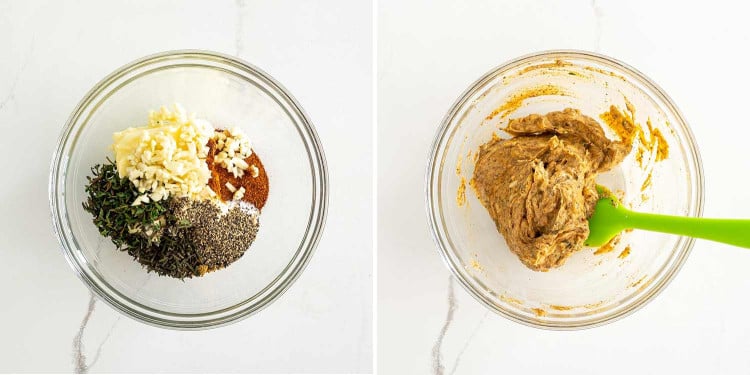
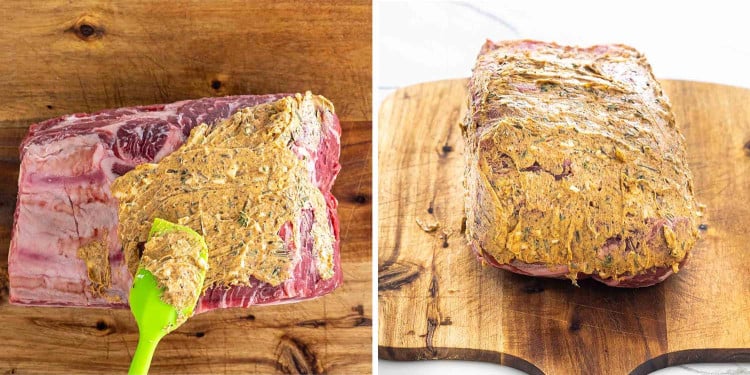
In a bowl, mix the soft unsalted butter, garlic, thyme, rosemary, chili powder, cumin salt and pepper. It’ll smell like a steakhouse already. Smear this magic all over the roast, don’t be shy. Use your hands. Get it into every crevice like you’re giving it a spa day.
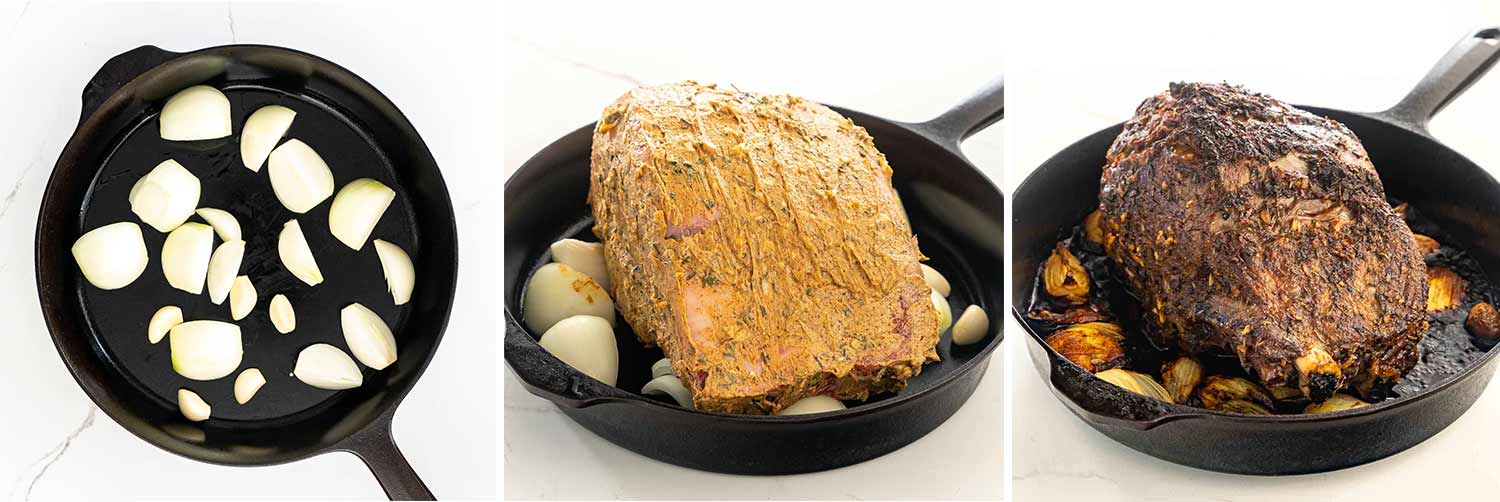
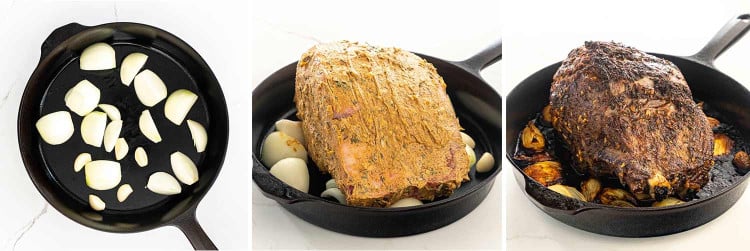
Toss onion wedges, garlic cloves, and herb sprigs into a large skillet or roasting pan. Set the roast on top, bone-side down. This not only flavors the drippings for your gravy, it keeps the meat lifted and lets air circulate.
Roast at 450°F (232°C) for 15 minutes to get that crust started. Drop the oven to 325°F (163°C) and keep roasting until the internal temp hits your sweet spot, 120°F (49°C) for medium rare (it’ll rise as it rests).
Pro Tip: Use a meat thermometer. Guessing is for charades, not $100 cuts of meat.
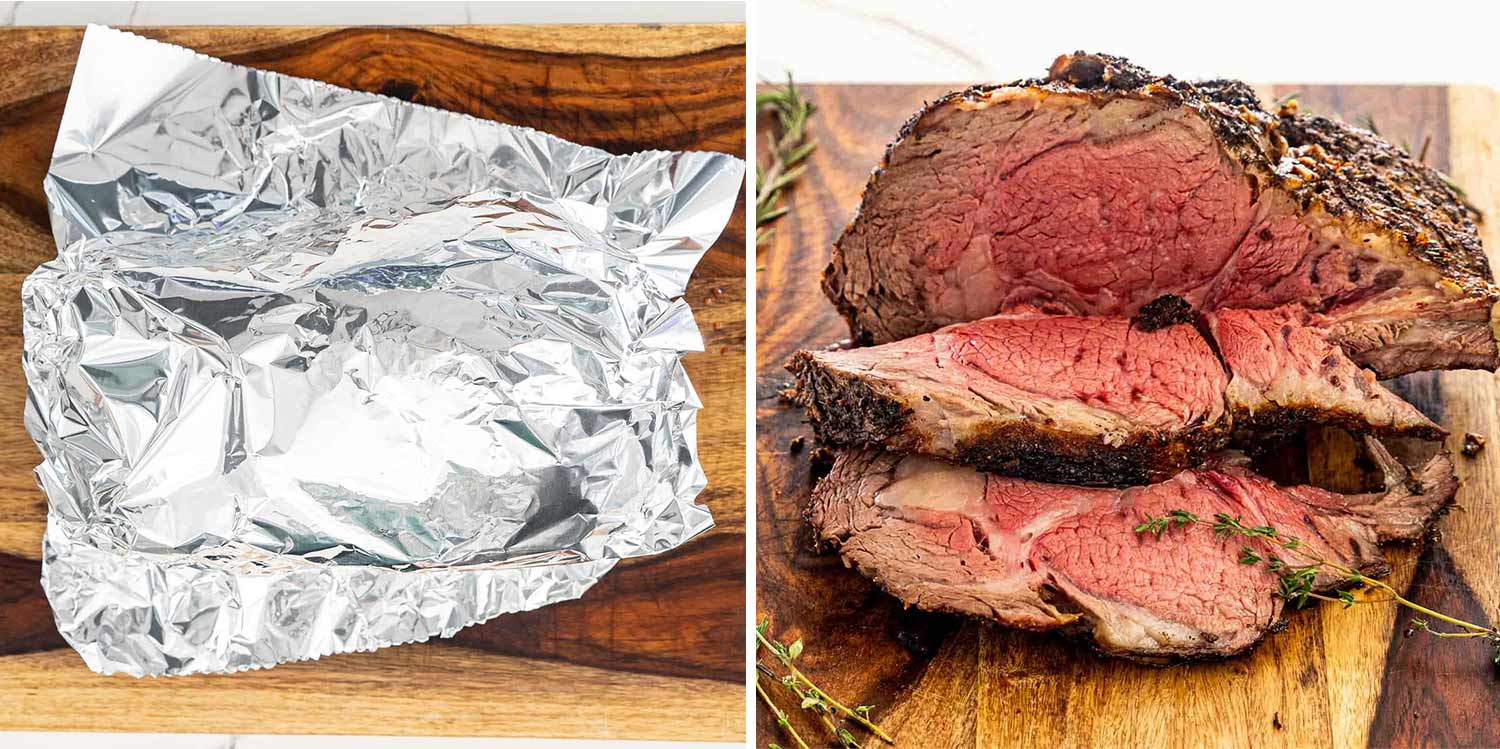
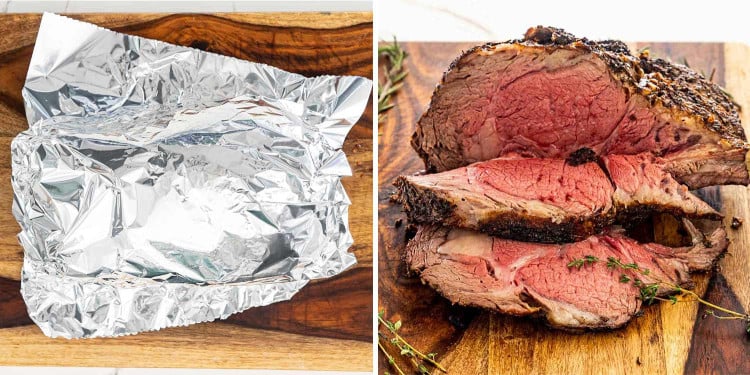
Remove the roast and tent it with foil. Let it rest for 20 minutes. Walk away. Have a glass of wine. This is when the juices redistribute, and the temp creeps up to perfection.
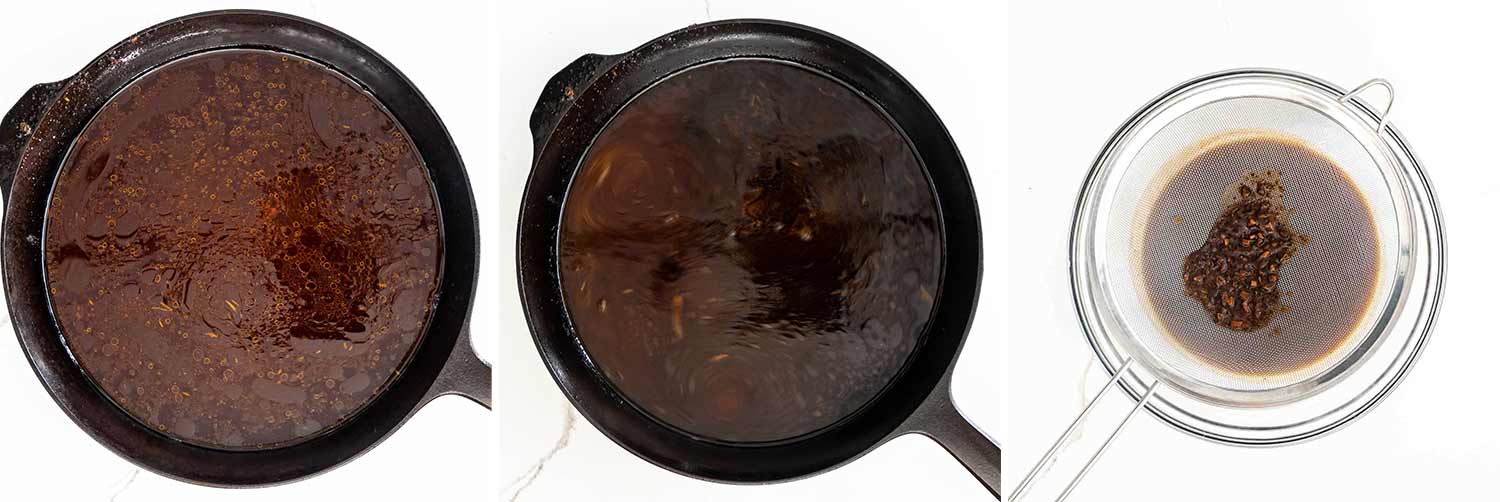
While to roast is resting, place the pan with the onions and drippings on the stove. Add red wine and beef broth, simmer for 5 minutes. Thicken with a quick cornstarch slurry (1 tablespoon cornstarch + 2 tablespoons water). Strain if you’re fancy. Pour it over everything if you’re not.
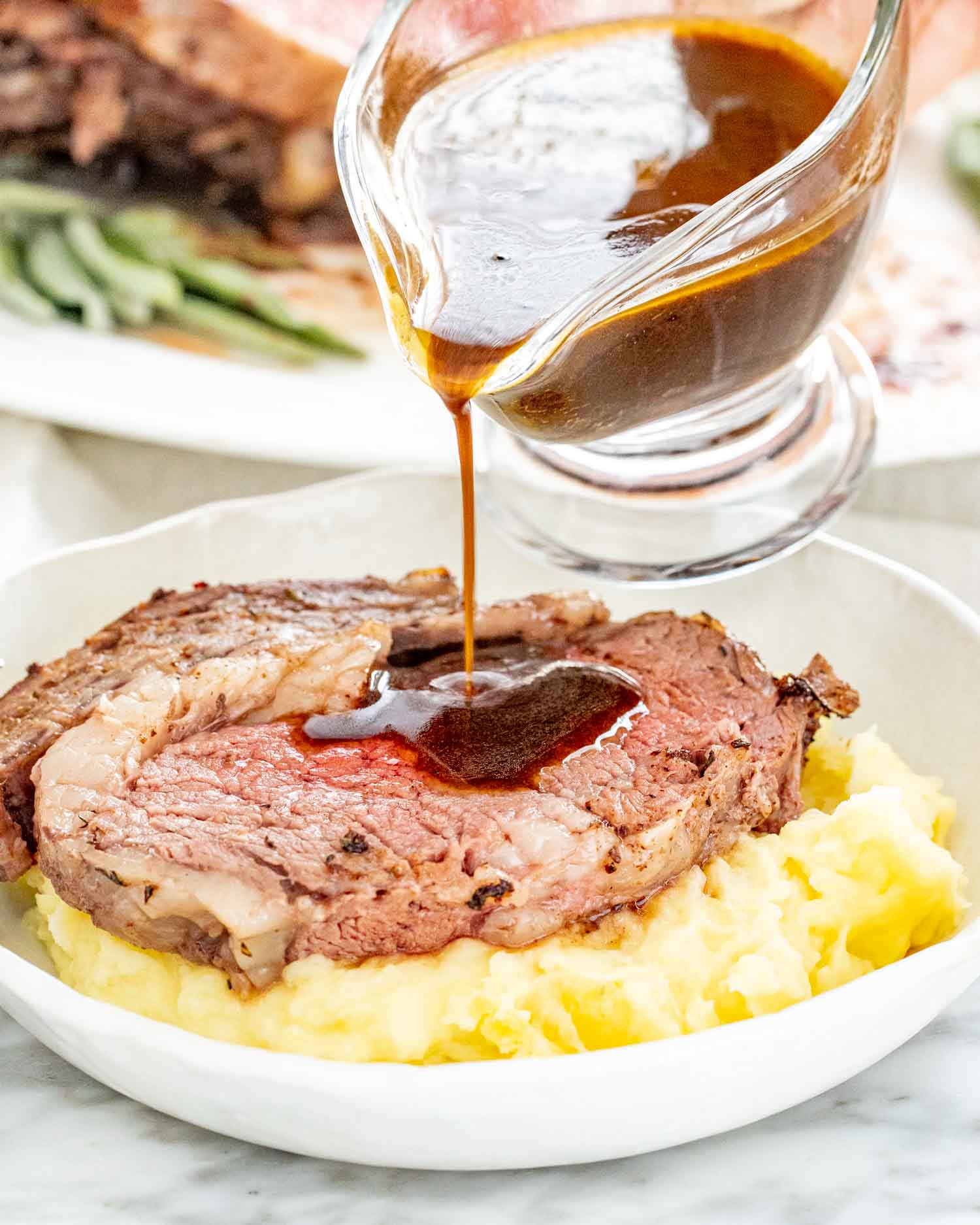
Use a sharp knife and cut between the bones for thick, juicy slices. Serve with that homemade gravy and watch everyone lose their minds.
How to Serve Prime Rib
You just pulled off a showstopper, now let’s plate it like the main character it is.
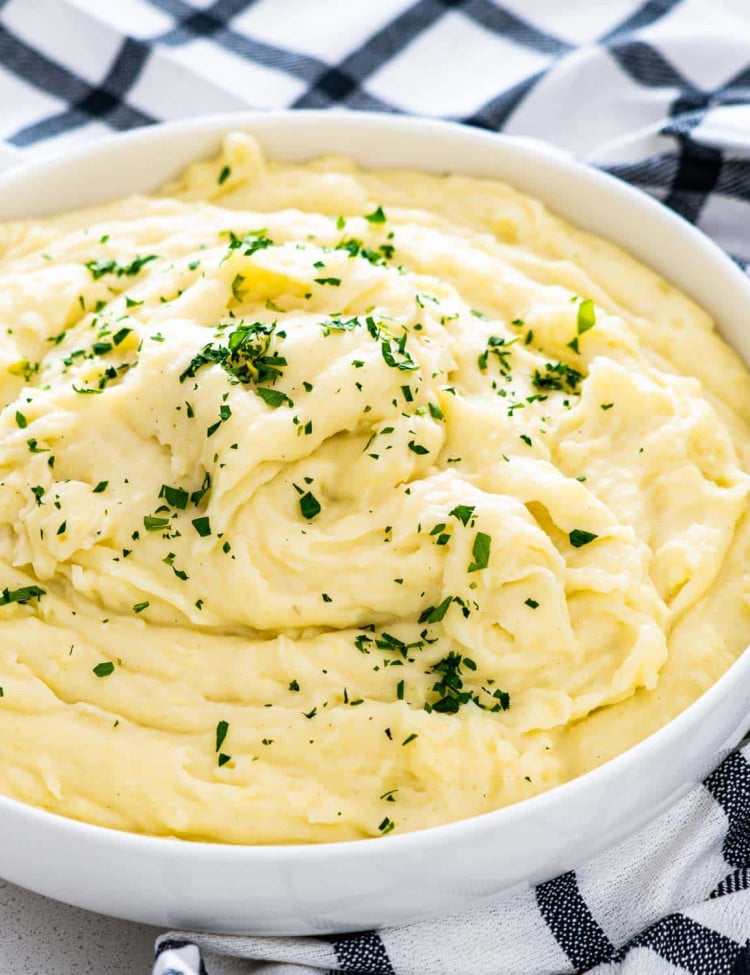
Mashed Potatoes

Honey Roasted Carrots
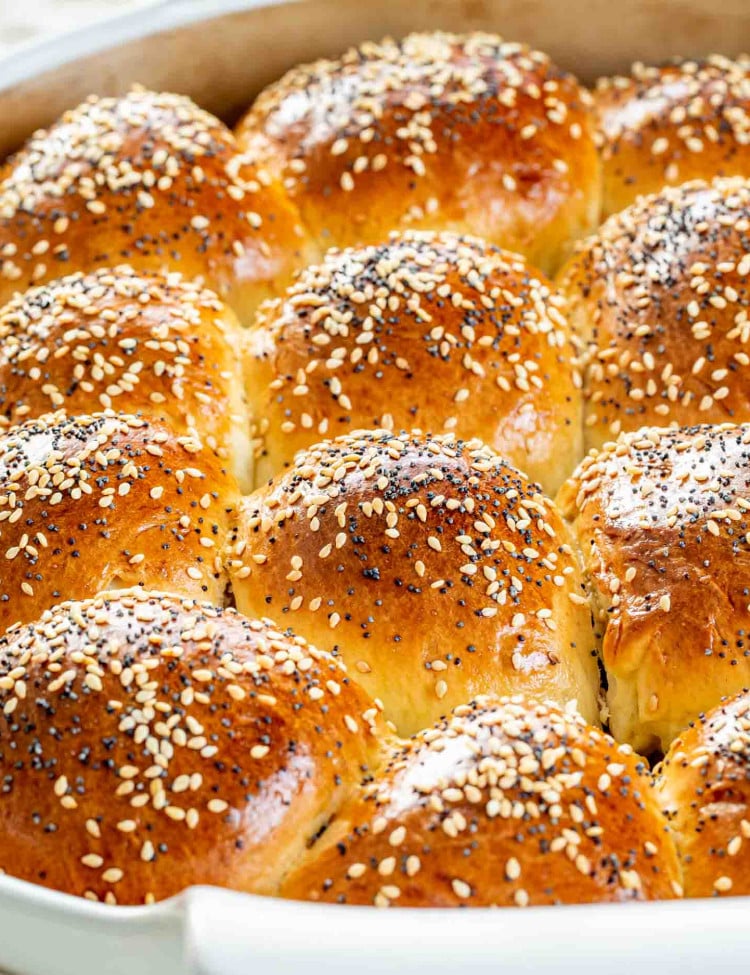
Classic Dinner Rolls

Potatoes Au Gratin
Frequently Asked Questions
How long do I cook a prime rib per pound?
Roughly 15 minutes per pound at 325°F is your ballpark, but don’t bet the roast on it. Ovens vary, and prime rib is not the time to wing it. Use a meat thermometer and start checking early. Always.
Do I really need to let it sit at room temperature before roasting?
Yes. Let it sit out for 1–2 hours before it goes in the oven. Cold roast = uneven cooking. This step is not optional unless you like a raw center and overcooked edges.
Do I need to use a bone-in roast?
Bone-in gives you built-in flavor insulation, which helps keep things extra juicy. But boneless works too, just reduce the cook time slightly and use that thermometer.
Why the compound butter?
Because it’s butter. And flavor. And crusty, herby, garlicky magic. Trust me, this step makes you look like a roast whisperer.
What if I don’t have a roasting pan?
Use a cast iron skillet (as I did) or any oven-safe dish that fits the roast. Just make sure it’s deep enough to catch all those glorious drippings for your gravy.
Can I make this ahead of time?
Sort of. You can season and slather with butter the night before, cover loosely, and refrigerate. Just don’t roast ahead, it’s best fresh, juicy, and right out of the oven.
Can I freeze leftovers?
Absolutely. Slice it, wrap it tight, and freeze for up to 3 months. Reheat gently in the oven or in a pan with a splash of broth so it doesn’t dry out.
Why is my prime rib dry?
Overcooked. It happens. Next time, pull it at 120°F for medium-rare and let it rest, this is when the magic happens. Also, don’t skip the compound butter. It adds moisture and flavor.
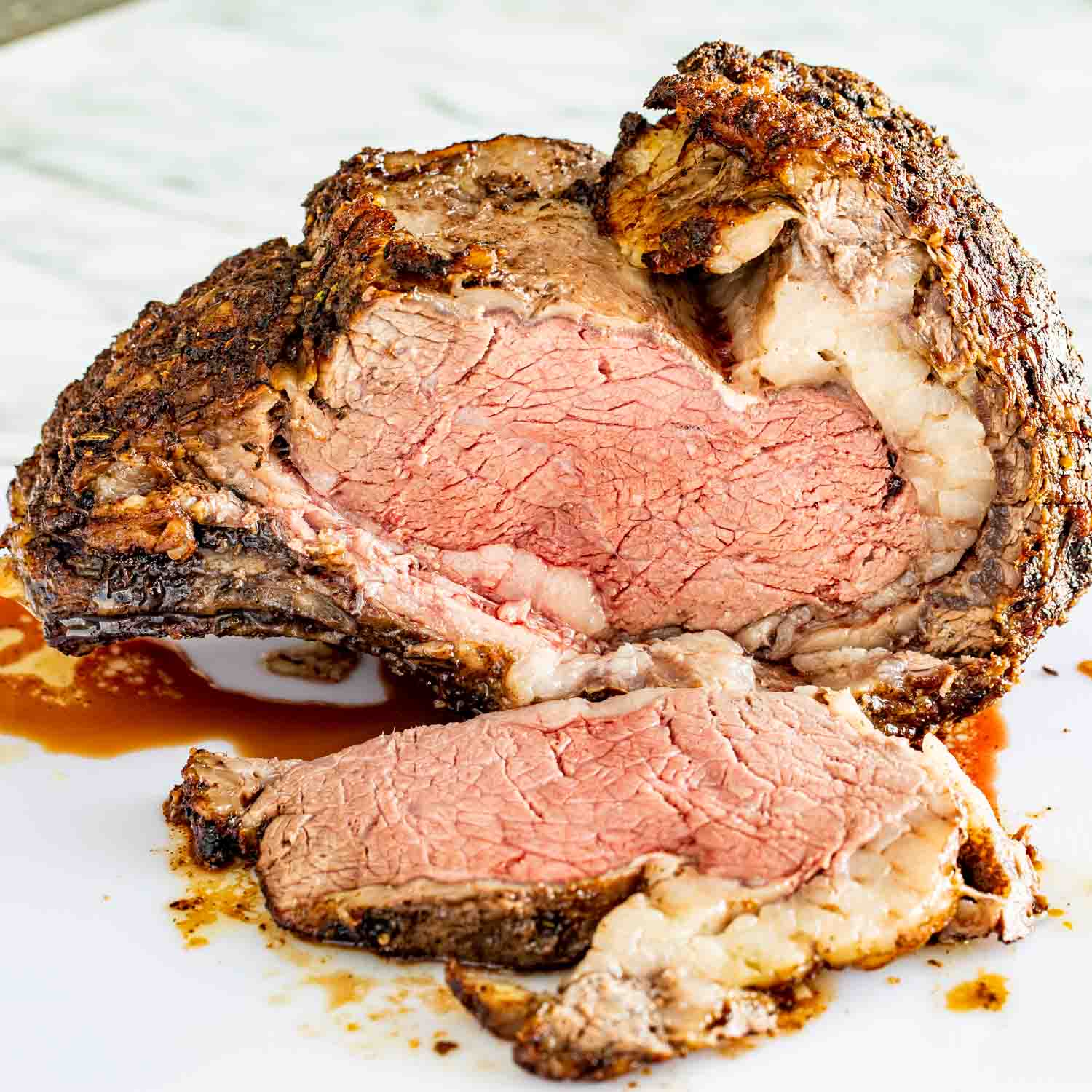
Carving Tips
Let it rest fully first, 20 minutes minimum. Then:
- Run your knife along the bones to remove the roast from the rack.
- Slice against the grain into thick or thin slices, your roast, your rules.
- Spoon gravy over the top, pat yourself on the back, and accept your compliments graciously.
Storage + Reheating
Leftovers? Lucky you. Prime rib holds up beautifully if you treat it right.
- Fridge: Store slices in an airtight container for up to 4 days. Keep any leftover gravy in a separate container.
- Freezer: Wrap individual slices tightly in plastic wrap, then foil, and pop into a freezer bag. Good for up to 3 months. Thaw overnight in the fridge before reheating.
How to Reheat Without Drying It Out:
- Oven: Place slices in a baking dish, add a splash of broth, cover with foil, and warm at 300°F (150°C) for 15–20 minutes.
- Stovetop: Gently reheat slices in a covered skillet over low heat with a bit of gravy or broth.
Pro Tip: Never reheat prime rib in the microwave unless you’re okay turning that juicy roast into leather. You’ve been warned.
Other Delicious Beef Recipes To Try
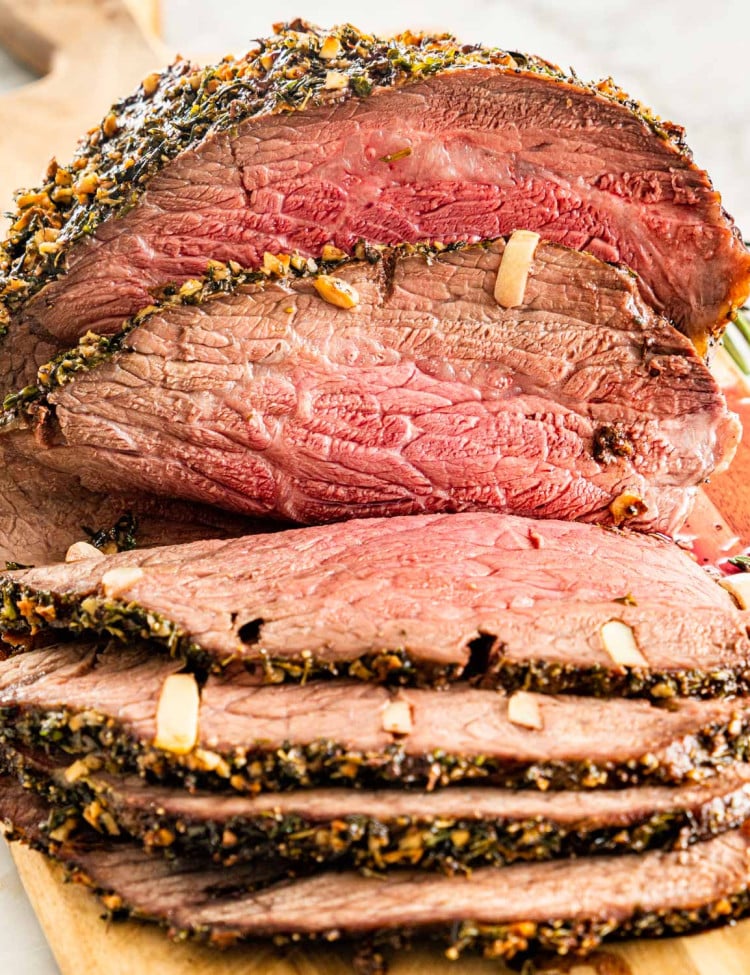
Roast Beef
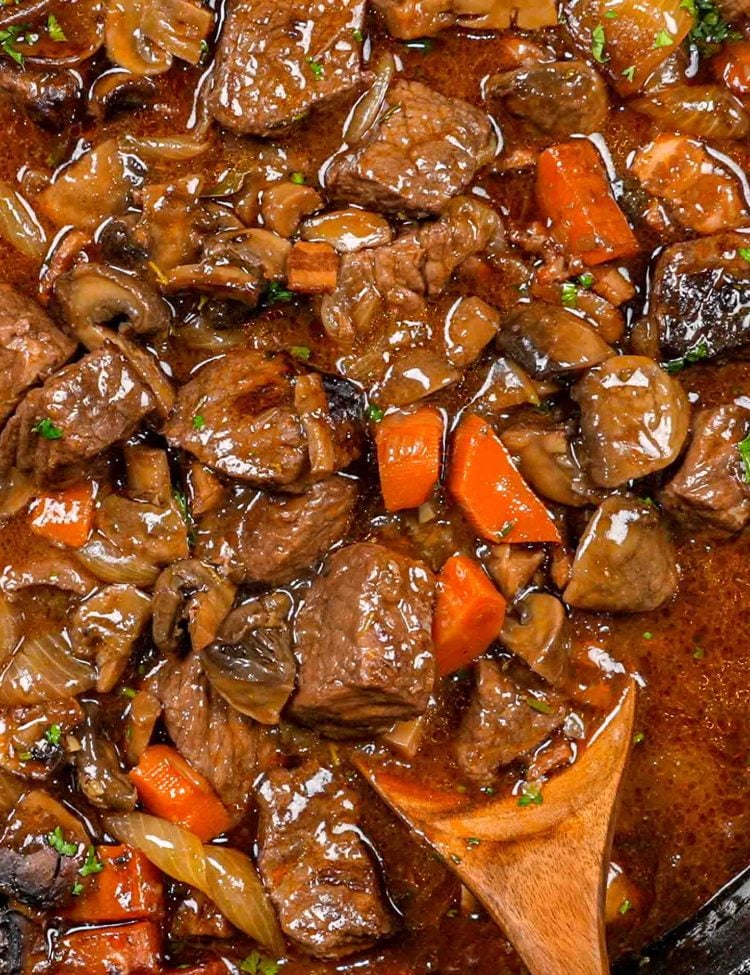
Weeknight Beef Bourguignon (Julia Child Inspired)
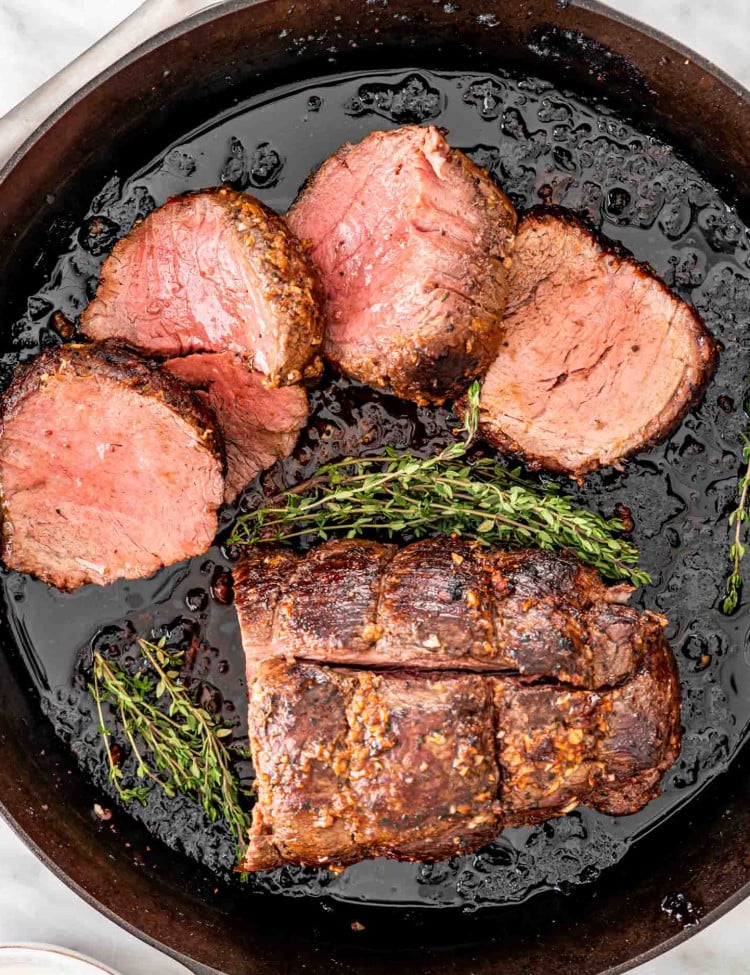
Beef Tenderloin

Beef Wellington
Before You Begin! If you make this, please leave a review and rating letting us know how you liked this recipe! This helps our business thrive & continue providing free recipes.
Prime Rib Roast
Video
Ingredients
Compound Butter
- 8 tablespoons butter (unsalted, room temperature (1/2 cup or 1 stick))
- 2 teaspoons chili powder (I used a mild chili powder)
- 1 teaspoon cumin (ground)
- 1 tablespoon thyme (chopped, fresh)
- 1 tablespoon rosemary (chopped, fresh)
- 3 cloves garlic (minced)
- 1 teaspoon salt (or to taste)
- 1 teaspoon pepper (or to taste)
- 5 pounds prime rib
Prime Rib Roast
- 2 medium onions (quartered)
- 5 cloves garlic (peeled)
- 4 sprigs thyme
- 2 sprigs rosemary
Gravy
- 1 cup dry red wine
- 1 cup beef broth (low sodium)
- 1 tablespoon cornstarch
- 2 tablespoons water
Before You Begin! If you make this, please leave a review and rating letting us know how you liked this recipe! This helps our business thrive & continue providing free recipes.
Instructions
- Remove your roast from all its packaging and let it sit out at room temperature for one to two hours. Also make sure your roast is fully thawed, you do not want to cook a roast from frozen. Using paper towels, pat the roast completely dry.
- Preheat your oven to 450°F for at least 30 minutes, while the prime rib comes to room temperature.
- In a bowl mix the butter with the chili powder, cumin, thyme, rosemary, garlic, salt, and pepper until well combined.

- With either a spatula or your hands, spread the compound butter mixture over the entire roast.
- Place the onions, garlic, thyme and rosemary in a large skillet that will fit your roast. If you don't have a large enough skillet, use a roasting pan. Place the roast over the onions in the skillet.

- Cook the roast for 15 minutes at 450°F, then reduce the oven temperature to 325°F. Continue to cook the roast until your meat thermometer reads 120°F. Estimate about 15 minutes of cooking time per pound of prime rib.
- Once the thermometer hits 120°F, remove the roast from the oven and transfer it to a cutting board. Cover it with aluminum foil and let it rest for 20 minutes. The roast will continue to cook as the juices inside settle, raising the internal temperature to 130°F for a perfect medium-rare prime rib.
- Slice and serve with gravy over mashed potatoes.
Gravy
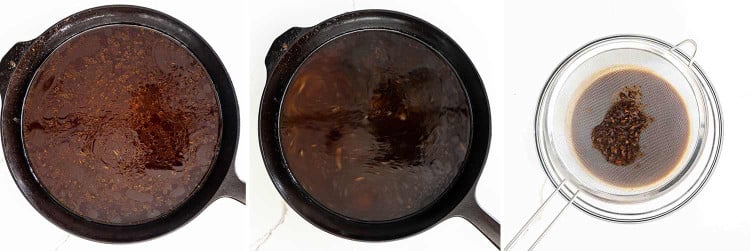
- While to roast is resting, place the skillet with the onions, garlic and herbs over medium high heat. Add the red wine and beef broth and bring to a boil. Lower the heat and simmer for about 5 minutes. The sauce should reduce a bit.
- Mix the 1 tablespoon of cornstarch with 2 tablespoons of water and to the skillet. Whisk it and continue to cook for a few more minutes. The sauce should thicken. Use more cornstarch if wanting a thicker gravy.
- Strain into a bowl, then pour it into a gravy boat.
Equipment
Notes
- Buy the right cut: Look for a bone-in, well-marbled prime rib, this is key to juicy, flavorful meat. If you can find a dry-aged roast, even better.
- Room temp is non-negotiable:Take the chill off for even cooking. A cold roast will cook unevenly and faster on the outside than inside.
- Don’t skip the rest: Once it hits 120°F, pull it out and let it rest, this is when the magic happens and the juices redistribute.
- Use a meat thermometer: It’s the only way to guarantee perfect doneness. Guessing leads to heartbreak.
- Make it your own: If you like a more classic garlic-rosemary vibe or want to skip the chili and cumin, go for it, the butter is flexible.
Nutrition Information
Notice: Nutrition is auto-calculated for your convenience. Where relevant, we recommend using your own nutrition calculations.